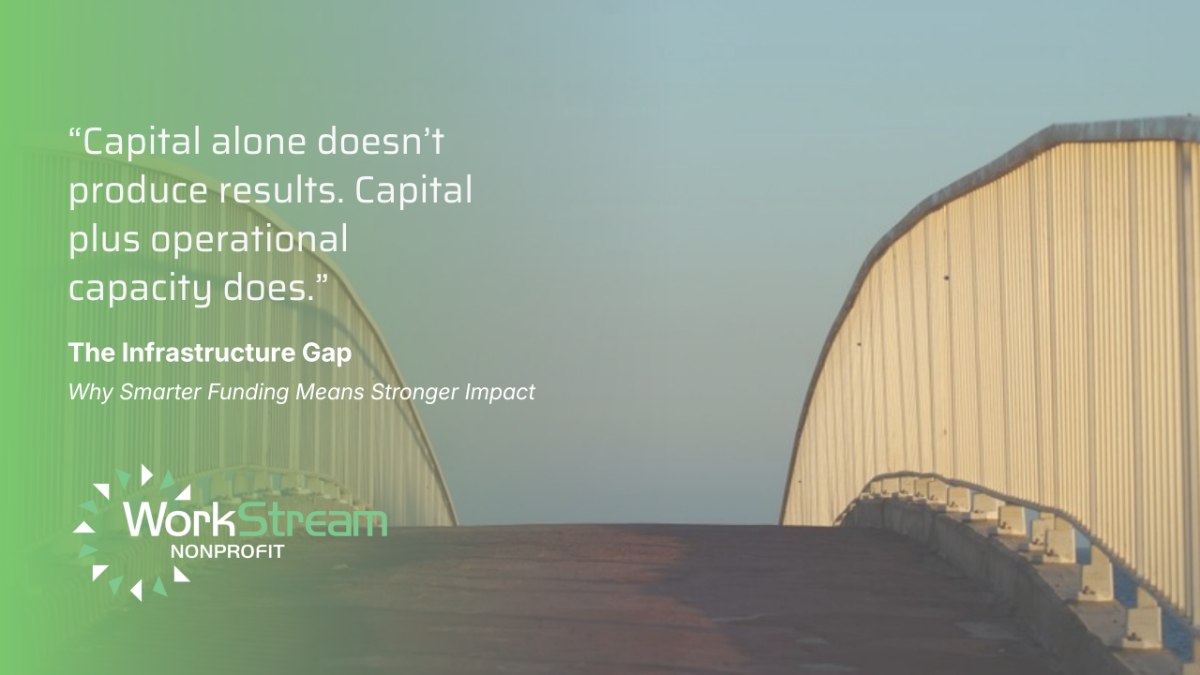
Part 2: Picking up where we left off
In Part 1, we made the case that operational infrastructure is the single biggest variable determining whether nonprofit funding produces real impact – and that closing the infrastructure gap is a shared responsibility between funders and nonprofits. Now it’s time to look at how the two dominant funding models in the sector are actually working in practice, and where each one falls short.
There are two main approaches to institutional funding, and most funders lean heavily toward one or the other. Both have real strengths. Both also leave impact on the table – just in different ways. The goal of this section isn’t to declare a winner. It’s to understand what each model gets right, what each model gets wrong, and what we can learn from a sector that has spent decades figuring out how to make capital and operational support work together: venture capital.
IV. Two Models, Same Missed Returns
There are two dominant approaches to institutional funding, and most funders lean heavily toward one or the other: restricted grantmaking and trust-based philanthropy. Each one has real strengths. Each one also leaves impact on the table – just in different ways.
The important thing to understand is that the problems we’re about to describe aren’t unique to one model. Whether restricted or trust-based, if the funding relationship doesn’t invest in the organization itself – not just its programs – it’s limiting the return on impact for everyone involved.
The goal isn’t to pick a side. It’s to take the best of both and build something stronger.
Restricted Grantmaking
At its best, restricted grantmaking provides structure, accountability, and clear expectations. Metrics give both funders and nonprofits a shared language for evaluating progress. Reporting requirements, when done well, can actually help newer organizations develop discipline around tracking outcomes and managing finances. For early-stage nonprofits especially, some structure from funders can be a valuable learning tool – as long as funders are actually reading those reports and providing feedback, not just filing them.
Where it leaks returns:
The compliance burden consumes mission time. A single small nonprofit may juggle 20-30 applications and reporting requirements from 10-20 funders, each with its own format, timeline, and metrics. Research estimates that most nonprofits spend 40 or more hours per quarter assembling grant reports (Sopact). That’s staff time being spent on paperwork instead of programs.
Like this article? Subscribe to our blog on Substack.
Share on LinkedIn or the EA Forum
Missed Part 1? Read it here.
2026 Webinar Series: Operations Health Check
Running a nonprofit takes vision and dedication. You're already doing the work. Now, let's refine and scale.
WorkStream Nonprofit's 2026 Webinar Series is a free, six-part operational checklist for your organization. Each 30-minute session is led by a subject matter expert and focused on one critical area of nonprofit operations. You'll walk away with clear frameworks, practical tools, and a checklist you can bring back to your team and start applying immediately.
Here's the lineup:
Budgeting & Money Management - May 12th
Compliance, HR & Risk - June 9th
Hiring Right - July 14th
Workflow Optimization - August 11th
Fundraising Systems - September 8th
In case you missed it:
Governance That Works - April 14th
All sessions run 12:00–12:30 PM EST on Zoom.
If you or a nonprofit leader you know could benefit from a clearer picture of where their operations stand, please join us.
Upcoming Webinar: Budgeting and Money Management with Jay Barrett
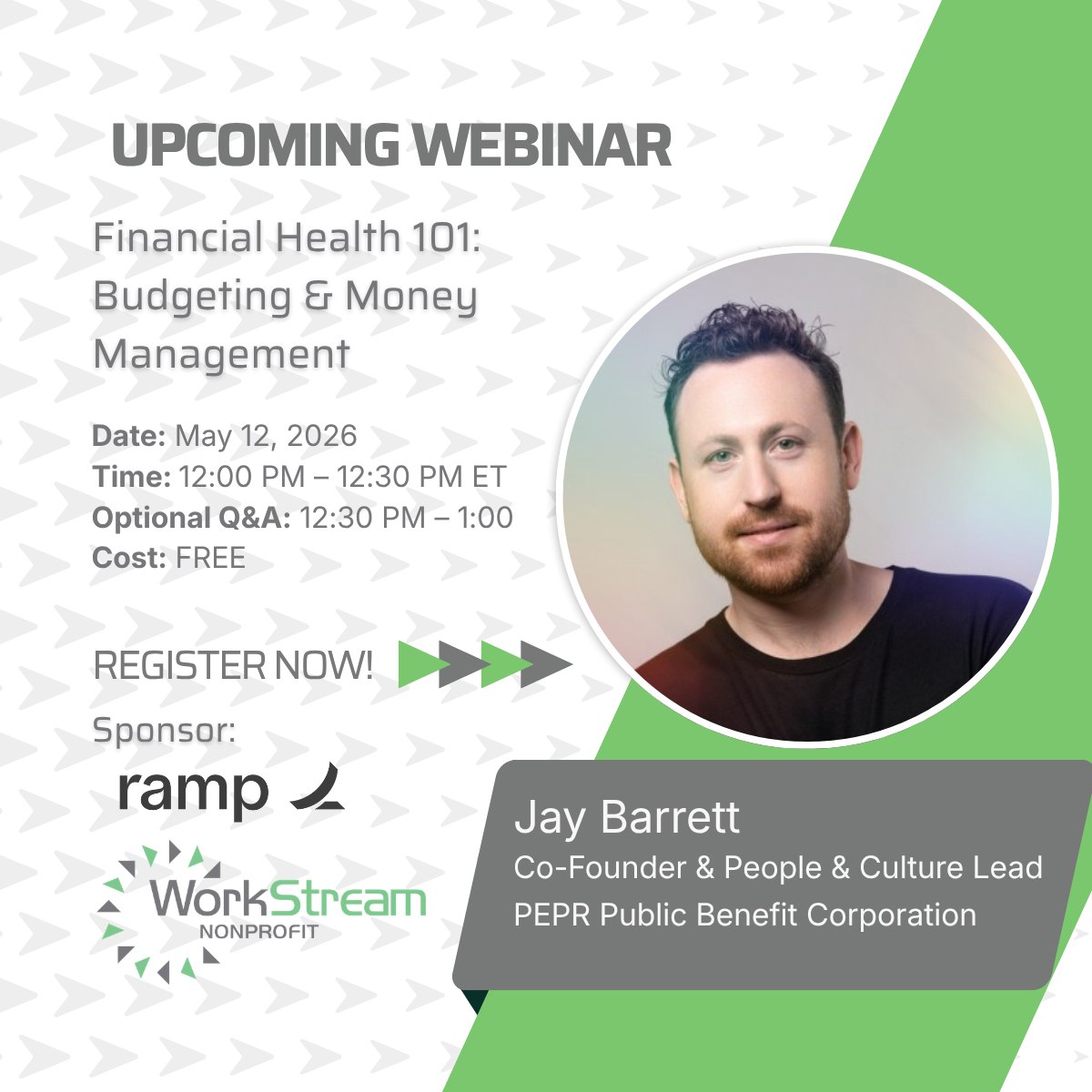
Tuesday, May 12th
12:00 PM - 12:30 PM EST
Many nonprofits operate without a formal budget process. They have numbers, but not a system. And without a system, it is difficult to plan for growth, respond to the unexpected, or demonstrate financial health to funders and board members.
Jay Barrett, CEO and People & Culture Lead at PEPR Public Benefit Corporation, will share practical approaches to building a budget that supports your mission, managing cash flow and runway, understanding restricted vs. unrestricted funds, and preparing your organization for financial scrutiny.
This session is focused on implementation. You will leave with tools you can apply right away, along with the opportunity to ask questions during live Q&A.
Register via the link below.
Thank you to our sponsor: Ramp
We look forward to partnering with you to establish your nonprofit's operational infrastructure to scale and thrive!
Deena Englander
WorkStream Nonprofit
Empowering Nonprofits for Sustainable Success
www.workstreamnonprofit.org
443-379-4105
deena@workstreamnonprofit.org
www.linkedin.com/in/deenaenglander
Click here to schedule a time to talk with me